Hypnosis scripts are one of the biggest things that keep new hypnotists from actually learning hypnosis.
They can make you feel prepared at first. You have words in front of you. You know what you are supposed to say next. It feels safer than standing there and figuring it out in real time.
But that safety is fake.
A script prepares you for one imagined person responding one imagined way. Real people do not work like that.
The second somebody reacts differently than the script says they should, a new hypnotist can freeze up. They think they messed up. They think the hypnosis did not work. Sometimes they walk away convinced that hypnosis just does not work on that person.
Usually, the problem is not that hypnosis does not work.
The problem is that they were trying to follow a script instead of paying attention to the person.
Scripts teach you to repeat words. Intuitive hypnosis teaches you to understand what is happening, notice the response, and adapt in real time.
Why scripts hold beginners back
A script gives you the illusion that there is one correct thing to say.
There is not.
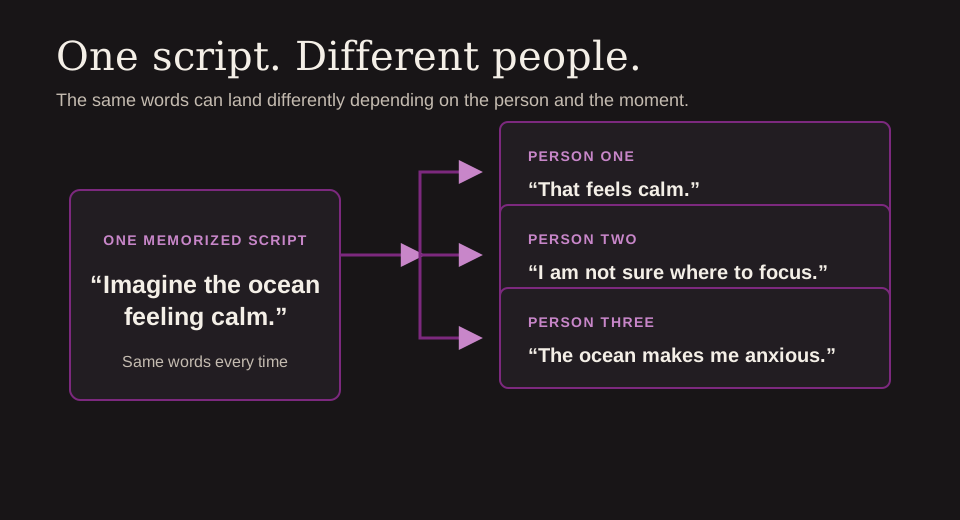
You can say the exact same words to two different people and get two completely different experiences. One person may love an ocean visualization. Another person may feel stressed by it. One person may respond immediately to a suggestion. Another may need clearer instructions, more time, or a different way of focusing.
The script does not know that.
It cannot see whether the person is following you. It cannot hear uncertainty in their answer. It cannot tell you that they are confused, distracted, uncomfortable, or having a completely different experience than you expected.
You can.
But only if you stop treating the script like it knows more than the person in front of you.
The moment a script stops working
Imagine you are doing a magnetic-fingers exercise.
The script tells you to describe magnets pulling their fingers together. You say the words exactly right. Their fingers barely move.
If all you know is the script, you are stuck.
You might repeat the same line. You might say it louder. You might decide the person is not hypnotizable. You might decide you are bad at hypnosis.
But if you are paying attention, you have options.
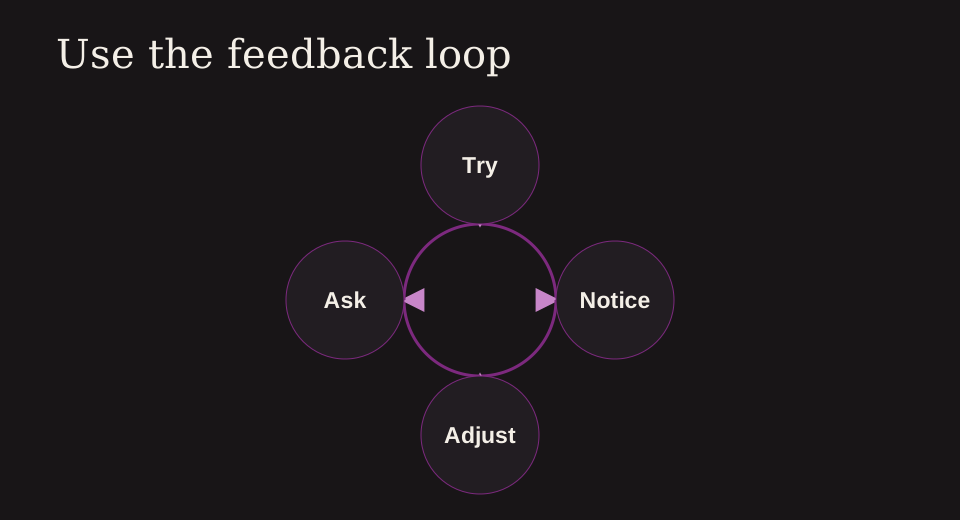
Ask them what they noticed. Maybe they say they were looking around the room. Maybe they were not sure where to focus. Maybe the magnets did not make sense to them, but they can imagine their fingers being gently pulled together by a string.
That is your next move.
You are not supposed to force the person back into the script. You are supposed to use their experience to guide the next suggestion.
Every response to a suggestion is feedback that can be used to make the experience more effective.
Learn the job, not the line
This does not mean you need to make up a whole hypnosis session from scratch.
It means you need to know what each part is trying to do.
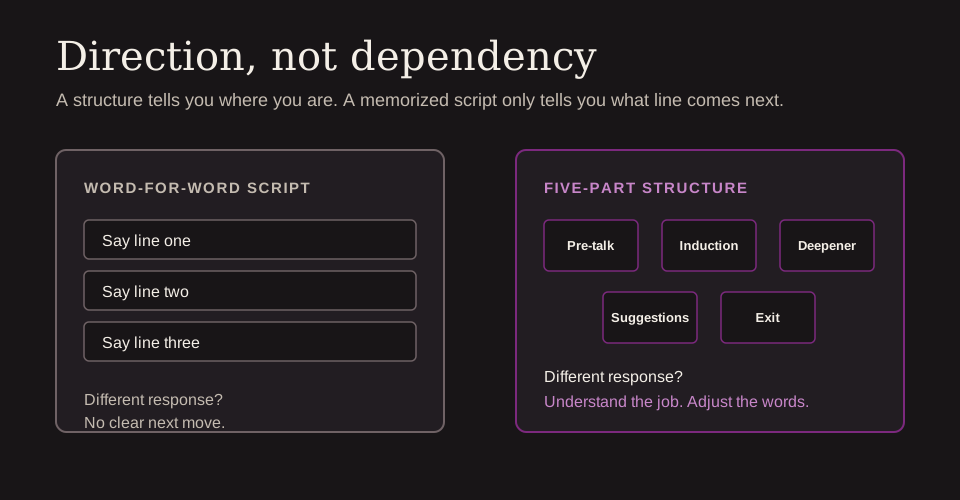
The pre-talk gets you both on the same page. The induction gives the person something clear to focus on. The deepener continues that focus. Suggestions guide the experience you both agreed to explore. The exit brings the exercise to a clear close.
Once you understand those jobs, you are not trapped by one line of wording.
You might ask someone to focus on the weight of their eyelids. You might ask them to notice their breathing. You might have them look at the space between their fingers. The words are different, but you still know what you are doing: directing attention somewhere clear.
That is what lets you adapt without guessing.
The free Five-Part Hypnotic Framework training teaches the map underneath the words, so you know where each tool fits and what to do with it.
Intuitive hypnosis is not winging it
Some people hear “do not use scripts” and think that means they have to walk up to somebody and make everything up with no plan.
That is not the point.
You should have a structure. You should know a few exercises. You should understand what a pre-talk is for, how you want to guide focus, what kind of suggestion you are trying, and how you will end the exercise.
But that is different from trying to memorize every sentence in a giant script.
A structure gives you direction.
A script makes you dependent on one path.
The more you understand the structure, the more natural you become. You can listen. You can use the person’s words. You can make a suggestion clearer. You can slow down. You can change direction without feeling like the whole thing fell apart.
That is the art of it.
What to practice instead of scripts
Pick one simple exercise and learn what makes it work.
For a magnetic-fingers exercise, understand that you are giving the person a focus point, activating their imagination, and then noticing how they respond.
Practice explaining that exercise in your own words.
Do not worry about saying it perfectly. Focus on making it clear enough that the person knows what to pay attention to.
Then try it with somebody who wants to participate. Ask them what they noticed. Use their answer the next time you give a suggestion.
That will teach you more than reading ten scripts ever will.
For a simple first-practice approach, read How to Practice Hypnosis. For the full session sequence, read What Happens in a Hypnosis Session? The Five-Part Structure.
What not to overthink
Stop trying to memorize hypnosis.
Learn to notice people. Learn the structure. Learn what each suggestion is trying to do. Then let the person’s response tell you what to do next.
That is when hypnosis starts to become intuitive.